SUSig_White-300x37
ACSU_HL_1C_B_K_360px

A free museum of modern and contemporary American art

Open Thu – Mon  •  11 am – 5 pm

  • Visit
  • Collection
  • About
  • Exhibitions & Programs
  • Learn
  • Get Involved
  • News

Anderson Collection at Stanford University

  • Visit
  • Collection
  • About
  • Exhibitions & Programs
  • Learn
  • Get Involved
  • News
Untitled (1600 x 1200 px) (1)

NOW OPEN!

Patty Chang: surfacing

What does the ocean remember?

Patty Chang: surfacing brings to light hidden histories of Chinese fishing communities along the California coast, connecting stories of labor, loss, and legacy.
patch (4)

Now On View

Spotlight

Ongoing

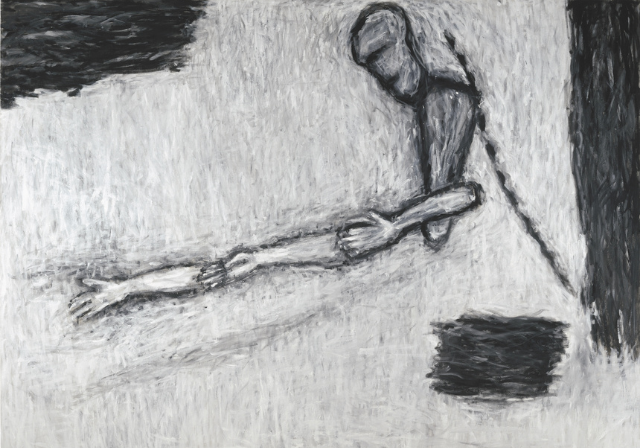
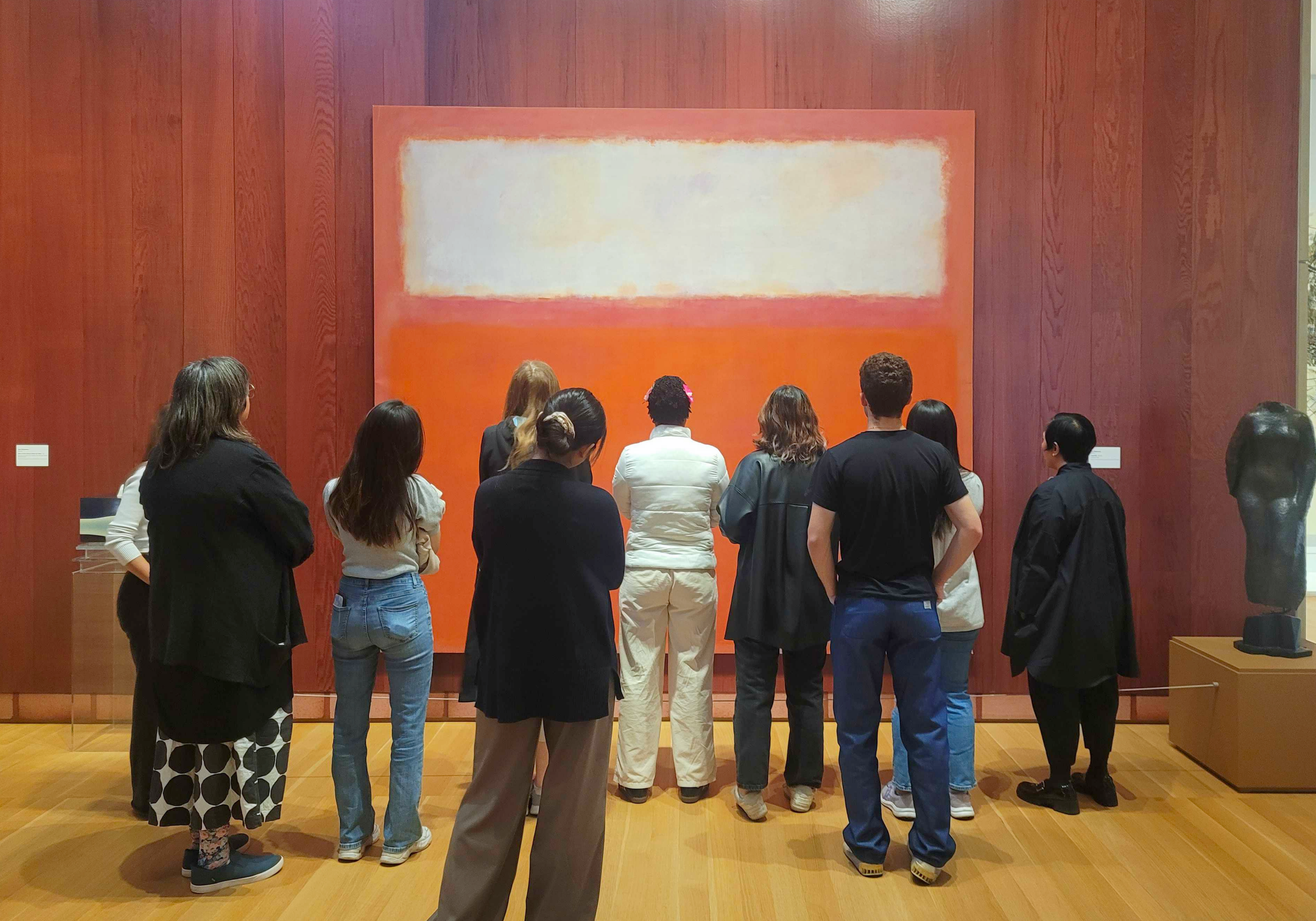
Experience a focused presentation of the work of celebrated contemporary artist Susan Rothenberg.
Untitled design - 2026-08-18T212556.686

Explore Our Collection


“Impressive… Contemplative… Distinguished” – LA Times

Upcoming Programs

View all Exhibitions & Programs

Recent News

decoration

Welcoming Interim Director Anne Shulock

July 16, 2026
decoration

Anderson Collection’s founding director steps down

Stanford Report | July 2, 2026

anderson.collection.stanford

Modern and contemporary American art including Martin, Nevelson, Pollock, Rothko, and more. The museum is always free!

Anderson Collection
Thank you, 48 hills (@48hillssf), for the shoutout Thank you, 48 hills (@48hillssf), for the shoutout!

In 48 hills’ “Fall Art Preview: 8 gallery and museum shows you simply must see,” Emily Wilson writes that Patty Chang “has no interest in making people comfortable.” Instead, her work delves into “grief, rage, gendered violence, and unseen labor.”

And that’s part of what makes "Patty Chang: surfacing" such an important exhibition. Chang asks us to sit with difficult histories and stories that have too often remained unseen—like the displacement of Chinese fishing communities on the California coast.

We’re grateful to see “surfacing” recognized in 48 hills’ fall art preview. 

Read the full review at the link in bio.
What a gathering to celebrate "Patty Chang: surfac What a gathering to celebrate "Patty Chang: surfacing"! 

The Patty Chang members-only event went off swimmingly, and members got to enjoy great conversation, edible treats, refreshing cocktails, and, of course, the first look at our newest exhibition, “Patty Chang: surfacing.”

In "surfacing", Patty Chang engages the ocean as a physical, geopolitical, and symbolic space, inviting you to consider the work of collection and recollection. Chang’s multimedia sculptural practice brings together archaeological remains from Point Alones Chinese Fishing Village, fish specimens from Harvard’s Museum of Comparative Zoology, and archival materials documenting the lives of Chinese fisher families on the Monterey Peninsula. In a critical encounter with the scientific enterprise of survey and collection, Chang brings to light the mysterious intimacies, forgotten collaborators, and unrecorded histories that haunt the Pacific and its coast.

Thank you to everyone who joined us to celebrate this new exhibition, and to our members for their continued support of the Anderson Collection.

"Patty Chang: surfacing" is on view through February 8, 2027, in the Wisch Family Gallery.

Photography: Harrison Truong
Sunday, September 27 at 4PM is the Morton Feldman Sunday, September 27 at 4PM is the Morton Feldman Centenary Concert!

In celebration of the centenary of the American composer Morton Feldman (1926–1987), the Stanford Symposium on Music and the Brain, the Department of Music, the Center for Computer Research in Music and Acoustics, and the Anderson Collection at Stanford University present a program examining the decades-long aesthetic dialogue between Feldman and the painters of the New York School. Throughout his career, Feldman enjoyed close friendships with artists including Mark Rothko, Philip Guston, Robert Rauschenberg, Jasper Johns, and Willem de Kooning. Feldman’s music, like the works of these artists, concerns abstract patterns, subtle variations, surface, materiality, and scale.

New York City’s BlackBox Ensemble will be performing works of Feldman’s alongside responses by Stanford composers Jonathan Berger, Erik Ulman, Lemon Guo, Calvin Van Zytveld, Celeste Betancur, and Brian Brown across two concerts. The first concert takes place at Stanford’s Anderson Collection, where the music of Feldman can be heard amidst paintings of Feldman’s friends. The second concert will take place at the CCRMA (Center for Computer Research in Music and Acoustics) Stage. These concerts are part of a symposium, Stopping Time: How music alters time perception, and will include public lectures providing perspectives on Feldman’s unique temporal world and the psychology and neuroscience of durational artistic experiences.

Click the link in bio for more information.

#StanfordArts #AndersonCollection
“Patty Chang: surfacing” is now on view! 🌊 “Patty Chang: surfacing” is now on view! 🌊

Hailed by 48 Hills as one of the shows you "simply must see," the newly installed “surfacing” explores the hidden histories of Chinese fisher families along the California coast in the early 1900s.

Through stories of labor, loss, family, and legacy, Patty Chang brings these overlooked histories into conversation with the present.

September 17, 2026–February 8, 2027

The Anderson Collection is free and open to all.

Learn more about the exhibition and upcoming programs at the link in our bio.
🚣🏻‍♀️🎣 💦 Mark your calendars for 🚣🏻‍♀️🎣 💦 Mark your calendars for Friday, September 25, at 5:30 PM for a special talk with artist Patty Chang.🦑 🌊

Dive deeper into our upcoming exhibition “Patty Chang: surfacing” during a special talk featuring Patty Chang in conversation with co-curators Kelsey Chen, PhD student in Modern Thought and Literature, and Marci Kwon, Associate Professor of Art & Art History.

“Patty Chang: surfacing” engages the ocean as a physical, geopolitical, and symbolic space. The exhibition culminates a year-long residency through the Denning Visiting Artist Program, during which Chang was embedded at Stanford’s Hopkins Marine Station. Incorporating fish specimens, archaeological remains, archival materials documenting the lives of Chinese fisher families in the early 1900s, and a porcelain table that travels from the Metropolitan Museum of Art to take new form at the Anderson, Chang’s sculptural practice surfaces the mysterious intimacies and unrecorded histories that haunt the Pacific Ocean and its coast. "surfacing" is the first solo artist exhibition commissioned by Stanford’s Asian American Art Initiative (AAAI).

Click the link in bio for more information.

#StanfordArts #AndersonCollection
Red-hot art🔥 Cool museum ❄️ It’s sizzlin Red-hot art🔥 Cool museum ❄️

It’s sizzling outside, so why not beat the heat with a trip to the museum? Come cool off in the galleries and find some of the collection’s boldest reds along the way.

❤️‍🔥 How many red artworks can you spot? Sound off in the comments with your responses.
🌊Opening soon!: “Patty Chang: surfacing” 🦑

“Patty Chang: surfacing” engages the ocean as a physical, geopolitical, and symbolic space. Opening September 17, the exhibition culminates a year-long residency through the Denning Visiting Artist program, during which Chang was embedded at Stanford’s Hopkins Marine Station. 

Incorporating fish specimens, archaeological remains, archival materials documenting the lives of Chinese fisher families in the early 1900s, and a porcelain table that travels from the Metropolitan Museum of Art to take new form at the Anderson, Chang’s sculptural practice surfaces the mysterious intimacies and unrecorded histories that haunt the Pacific Ocean and its coast. “surfacing” is the first solo artist exhibition commission for Stanford’s Asian American Art Initiative (AAAI). 

Learn more about the exhibition and the artist at the link in bio.

"Patty Chang: surfacing" is co-curated by Kelsey Chen (@silkpunkbaby) and Marci Kwon (@marcisoonmi).

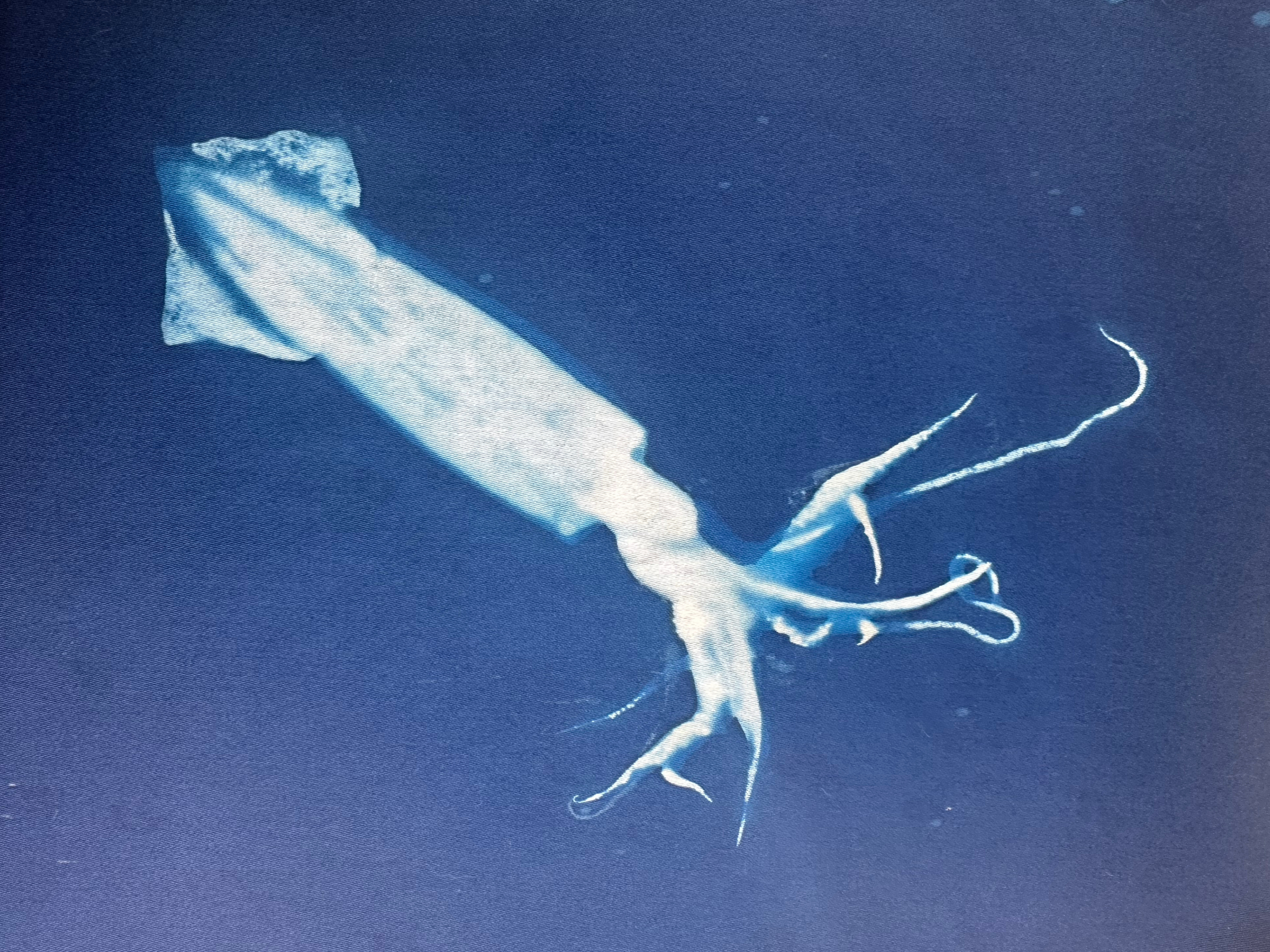
Image: “Untitled", 2026, cyanotype, © Patty Chang
The "picture-taker." Leo Holub, who founded Stanf The "picture-taker."

Leo Holub, who founded Stanford's photography program, made portraits of more than 100 prominent American artists and created a rich portfolio of campus, city, and nature images. 

Holub built Stanford's darkrooms in 1969 and began teaching the following year. He was proud of his students, a number of whom went on to successful careers as photographers and teachers. (By his estimate, he taught some 4,500 Stanford students before retiring in 1980.)

From 1986 to 1996, Harry and Mary Margaret Anderson commissioned Holub to create portraits of more than 100 American artists in their collection, including Wayne Thiebaud, David Hockney, Jasper Johns, Robert Rauschenberg, Helen Frankenthaler, and Claes Oldenburg. The resulting limited-edition portfolio ranks among the finest examples of artist portraiture. 

Images by Leo Holub:
📷 Susan Rothenberg, Bruce Nauman, Galisteo, NM, 1992
📷 Martin Puryear, Accord, NY, 1992
📷 William T. Wiley, Woodacre, CA, 1994
📷 Agnes Martin, Galisteo, NM, 1992
📷 Wayne Thiebaud, Brisbane, CA, 1994
📷 Lynda Benglis, NY, 1986
📷 Sam Francis, Palo Alto, CA, 1992
📷 Peter Voulkos, Oakland, CA, 1994

#WorldPhotograghyDay #StanfordArts #AndersonCollection
Load More... Follow on Instagram

Information for:

  • Students
  • Members
  • Staff (Authentication Req'd)

Contact

314 Lomita Drive
Stanford, CA 94305
650-721-6055
Contact us

View map

Campus Partners

  • Cantor Arts Center
  • Department of Art & Art History
  • Institute for Diversity in the Arts
  • Stanford Arts
  • Stanford Live

Newsletter Sign Up

Subscribe
Make a Gift
Stanford University
  • Terms of Use
  • Privacy
  • Copyright
  • Trademark
  • Non-Discrimination
  • Accessibility

© Stanford University, Stanford, California 94305