William Baziotes
Serpentine 1961
Reproduction of this image, including downloading, is prohibited.
Audio Description (02:23)
Full Audio Transcript (Expand)
Serpentine
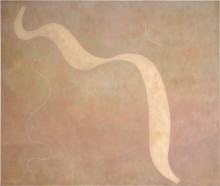
Serpentine was painted by William Baziotes in 1961 in oil on canvas. The painting is six-and-a-half feet tall by five-and-a-half feet wide and surprisingly sparse for such a large canvas. Rather than fill the vast space with images, Baziotes delivers a quiet artwork. The piece is painted in muted earth tones where the foggy, mottled background may grab the viewer’s attention as much as the three simple but elegant shapes painted on it: a thin squiggle, a wide ribbon, and an imperfect circle. The painting feels like a view captured under shallow ocean water with fiery colors of sunset penetrating the water.
The background of Serpentine is made of light colors: rust, bubblegum pink, jade green, and brown. The colors never bleed into each other, but the paint being dappled all over, they can lose their sense of being distinct from each other. The top third is the palest. The middle third is slightly darker with more pink. The bottom third is darkest, with a brown outline across the canvas like a rippling sandy ocean floor.
Now to the three shapes. On the left, a slender vertical white squiggle pops out of the bottom border like a wavy single blade of seagrass. It meanders three-quarters of the way up, and the top curls down. Above it, a wide, sinewy ribbon cuts diagonally from the upper left to nearly touch the bottom on the right. This ribbon is a pale beige, and a gossamer layer of the background colors are painted over it. It is dimmer at the top and becomes more luminous as it descends. Near the upper right corner is an imperfect circle of the same slim white as the left-side squiggle.
The word “serpentine” refers to something sinuous and snakelike, like the squiggle and the ribbon here. It is also the name of a group of minerals that are rare on the Earth’s surface but abundant deep under the ocean floor. Serpentine minerals are usually mostly green mixed with a range of other colors, some of which are found in this painting. What they also have in common with the artwork is the cloudy, gauzy quality to the colors. It is not clear whether Baziotes intended to make reference to the minerals in the title of the work. But his appreciation for nature and desire to explore its mysteries in art clearly shine through.
Artwork Details
- William Baziotes
- b. 1912, Pittsburgh, PA
- d. 1963, New York City, NY
- Serpentine
- 1961
- oil on canvas
- 66 x 78 in.
- 2014.1.070
- Decade:1961-1970
- Medium:oil
- Movement:New York School
- Currently not on view